


Journal of Elder Robert Young (1892-1894)

Journal of Elder William Hayes (1893-1895)
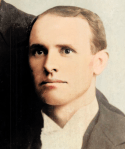
Journal of Elder John Hinckley (1895-1897)

Journal of Elder James Hubbard (1895-1897)

Journal of Elder Isaac Smith (1897)
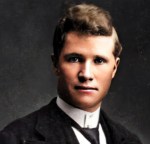
Journal of Elder Will Dawson (1898)
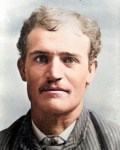
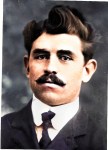


Journal of Elder John Morley (1911)


Mission Journals in Blount County
These are the journals and letters written by the first Smoky Mountain Missionaries who served in Blount County. They have been transcribed and are available at the links above. The transcriptions focus on their efforts in Blount County and include some of their labors in surrounding areas. As of January 2025, 12 mission journals have been transcribed; we hope to find more. The Church History Department has scheduled more to be scanned. They will be available when possible. The letters of Elder Fullmer are included as transcriptions for the time he served in Blount County.
All members and “friends of the missionaries” who can be identified and found through genealogies have had their full names transcribed in the journals. These names are linked to their “about” pages on Family Search. You can learn more about them in the journals by clicking on their names. For example, in the journals’ transcriptions, “Bro. G” can be “clicked” to visit his page on Family Search and is presented as Bro[ther Joseph John Calvin (JC)] G[arland]. More about this later.
These first missionaries served during very challenging times as “anti-Mormon” sentiment was very strong in Tennessee and was echoed frequently in the Maryville Times. Mob violence was a real concern following the murders of Elders Joseph Standing, William Shanks Berry and John Henry Gibbs, as well as members John Riley Hudson and William Martin Conder. To better understand this context and more, there are a few instances in which I have included an article from a newspaper or a photo from the Southern States Mission that the missionaries would have read or, in the case of Elder Robert Cunningham Young, responded to in the Maryville Times, publishing his own article as a testimony of truth in defense of the gospel of Jesus Christ.
Identifying Locations
The transcriptions of these journals include missionaries’ efforts mostly within Blount County and specifically within Smoky Mountain Ward boundaries. However, some of the journals have been transcribed for areas outside of the county. The “traveling elders,” as these missionaries were called, were assigned to labor in Blount County as part of the East Tennessee Conference, but often left the county to assist missionaries in other areas for extended seasons or for periods of respite after arduous months of labor. For example, there are times the missionaries cross the county border into Loudon for a few days or would spend a month in Knoxville. Some of these entries are included in the transcriptions. For context, the boundaries of the East Tennessee Conference of the Southern States Mission are similar to today’s boundaries of the Tennessee Knoxville Mission.
Locations were often mentioned daily in their journals but this was not always the case. In those instances when locations are not mentioned, the names of the people they visited were used as a reference to identify where they were. This method has its flaws but appeared to be the best option for identifying when they were specifically in Blount County, or heading out of the area or to the area.
Some of the journal entries are transcribed and presented even though the missionaries are away from the county. This is done for context and additional understanding of circumstances. Some examples are when they are in Chattanooga at the Mission Office or at the meeting of the East Tennessee Conference with other missionaries and the mission president, Elias S. Kimball, in Newport, Tennessee. Elder Robert Cunningham Young and Elder William Lehi Hayes provide similar writings of the events of this meeting and both are provided in the transcriptions. Therefore, these are not complete transcriptions of their journals. They are transcribed with a focus on what is of value to the Smoky Mountain Ward. I must mention that there are very few redactions. I do not believe these amazing elders realized – at the time of writing their thoughts and activities – the priceless value of their journals to us 100+ years later. Aside from a rare redaction, these journals are transcribed in full for the days they are laboring within the Smoky Mountain Ward.
Identifying Full Names
Most of the names of people were written by thie missionaries in their journals simply by initials or just a last name or another variation. The members often are referenced as “Brother” or “Sister.” I have a working spreadsheet of the first 102 baptisms from 1892 to 1939. The members in the spreadsheet were identified through baptismal records and many have been identified in these journals. I transcribed their names as full names for better understanding of who the missionaries are referencing in every instance possible. This is also done for each of the missionaries who could be identified. The members are sometimes referred by “Brother” or “Sister.” There are a few instances in which the missionary referenced someone with “Brother” or “Sister” and a baptismal record does not exist for that person, which may mean they were baptized members of The Church of Jesus Christ or they are just close with the missionaries, and this is merely incidental. This is a note that requires additional research.
Names of people who have been identified are written in full and placed in brackets. For example, “Brother Smith,” “Andy Smith,” or “A. J. Smith” will appear as “Brother [Andrew Johnson] Smith,” “Andy [Johnson] Smith,” or “A[ndrew] J[ohnson] Smith” in the transcriptions. This same method is done for all missionaries. This is also done for friends of the missionaries who could be identified in Family Search. To identify between family members who share the same name, this is done through context within the journal. For example, Mary Jane Harmon and Mary Jane Davis Harmon are identified as separate people based on how far the missionaries walked from house to house or if they have been identified at some point as distinct people. Mary Jane Davis Harmon was identified in a journal entry as “Grandma Harmon” and Mary Jane Harmon was identified separately as “M. J. Harmon.” There is also an instance of Mary Jane Davis Harmon being identified in a journal simply as “Sister Harman” via her coinciding baptismal date. This method is not absolute and may have errors; however, it appears to be mostly accurate and the best method available. Punctuation also has been added when necessary for ease of reading. Any mistakes in transcription are my own and I am responsible for them. If any are identified, please notify me. Thank you.
– Mike Merrell
 Smoky Mountain Ward