
The Mormons in the hills of eastern Tennessee were often under attack by people from other churches. Near Bybee on November 6, 1934, I wrote, ‘At Luther Talley’s [we] found a boy 21 y[ea]rs old, just been married two days, reading & studying [The] Book of Mormon. Found this to be [the] case all over the community. The sectarian ministers have been jumping on the children of the Saints. They have to study so as to defend Mormonism.
– Brigham Dwaine Madsen (1914-2010)
The First Missionaries
The gospel of Jesus Christ began to be taught in Blount County, Tennessee in 1892. This is the when missionaries entered the county and the first member was baptized near the Pigeon River before moving to Millers Cove shortly thereafter. The first baptism in Blount County occurred in 1893. In addition to the first baptism, there is one instance in which Elder Robert Young in his journal identified two previously-baptized members he met in Blount County, in 1893, and baptismal records available on Family Search reveal that these two members were baptized in 1885 and 1886. These two records do not note the location of the baptisms. Nevertheless, other records of these two members likely place them in North Carolina during the timeframe of their baptisms. Therefore, absent any complete baptismal records prior to 1893, it is a logical conclusion that this was the first baptism in the county and likely not possible that there were more – or many more – before 1893. This should not be surprising because the Southern States Mission opened in 1876 and missionaries had only begun receiving calls to labor in Tennessee thereafter.
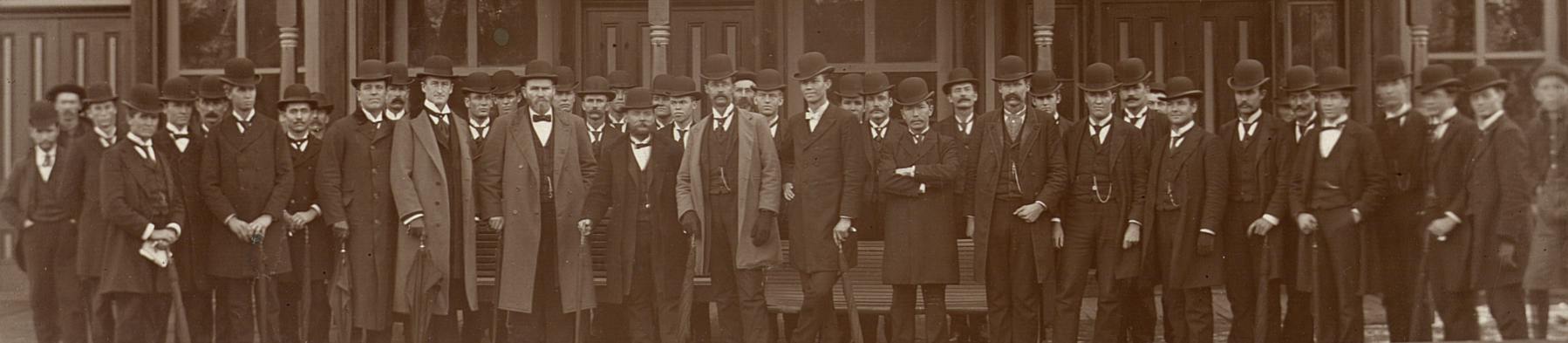
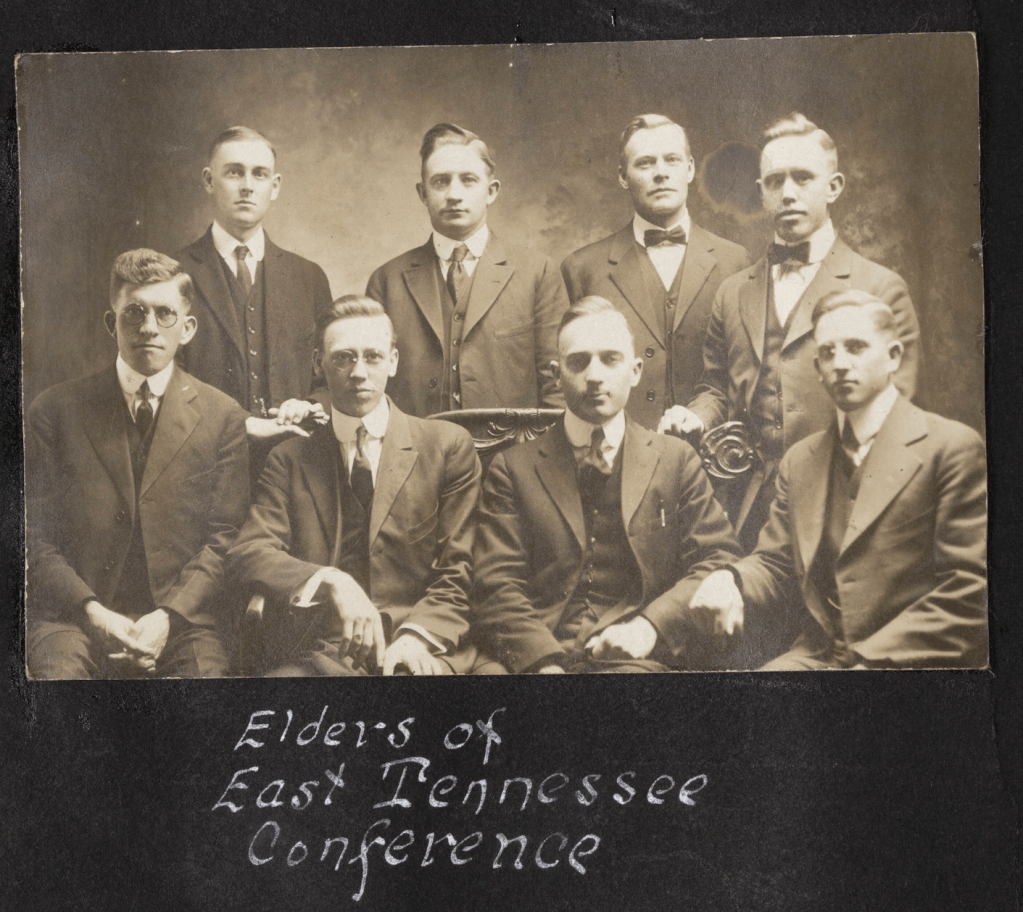
By September 1893, Elder William Lehi Hayes reported 101 baptisms in the East Tennessee Conference, most of which were in Wilson County where the Baird’s Mills Branch had been established in 1884. By early 1892, 675 elders had labored in the Southern States Mission which comprised 10 “Conferences” divided by geographical region. Blount County fell within the East Tennessee Conference of the mission and there were more than a dozen areas of assigned labor within the Conference. Considering the vast territory of the Southern States Mission (Mississippi, Alabama, Georgia, South Carolina, North Carolina, Tennessee, and Kentucky) and the relatively small number of “traveling elders,” as they were called, to walk all counties, Blount County likely had only received a small number of missionaries prior to 1892, if any at all.


At the time, the missionaries of the Southern States Mission reported that their work succeeded “mostly among the poor and [that] the greater portion of the Elders walk from place to place.” They logged their daily mileage in their journals as requested by mission presidents. Each missionary had walked thousands of miles by the time they left Tennessee. As a consequence, these early missionaries experienced prolonged “exposure,” malnutrition, illness, and exhaustion. Many returned home early due to sickness and some perished shortly after returning home or even while serving.

By their own standards and accounts, these missionaries were unprepared to teach the gospel of Jesus Christ. Some expressed this sentiment in acceptance letters to the prophet. They did not request to serve a mission, nor did they carefully plan to do so. They were called to serve regardless of preparation or education. One missionary even noted addictions and difficulties obeying the Word of Wisdom when he was called to serve. These men recognized they were “the weak and the simple,” but they came forth with great faith to help establish “the everlasting covenant” as revealed by Joseph Smith in the introduction to Doctrine and Covenants.
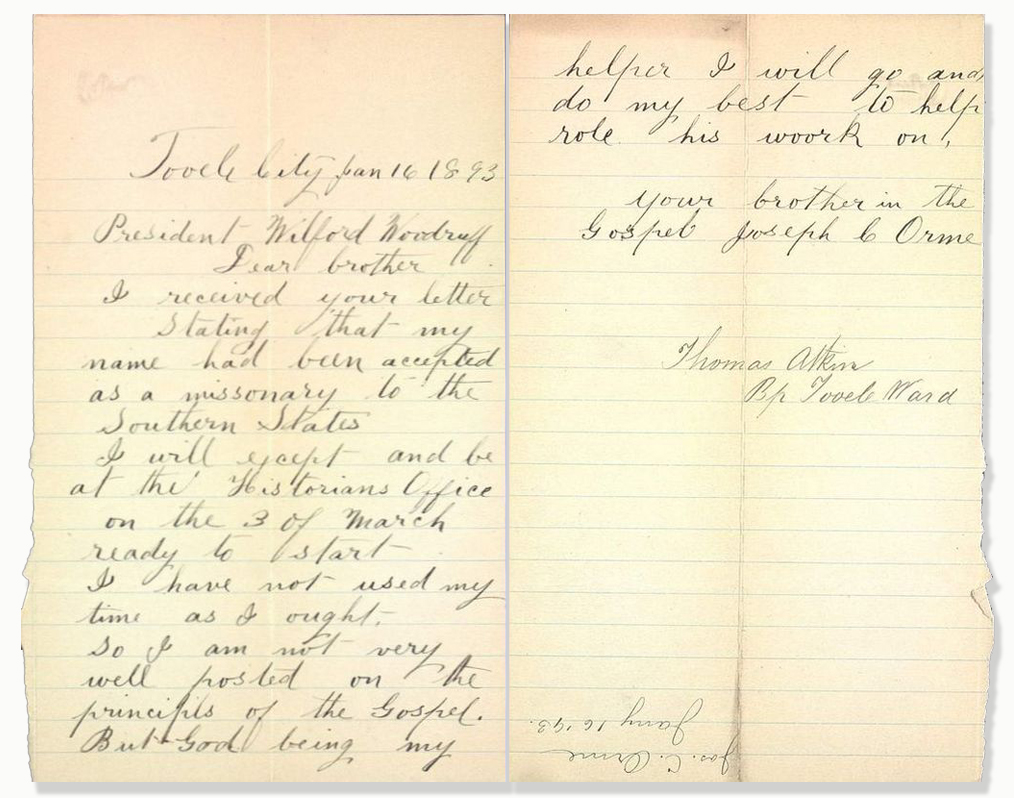
“President Wilford Woodruff – Dear brother, I received your letter stating that my name had been accepted as a missionary to the Southern States. I will accept and be at the Historians Office on the 3[rd] of March ready to start. I have not used my time as I ought, so I am not very well posted on the principles of the gospel. But God being my helper, I will go and do my best to help role (sic) his woork (sic) on. Your brother in the Gospel…”
– Joseph C[ross] Orme
Early Persecution
In the early years, there was great animosity for the gospel of Jesus Christ, its new members and missionaries. Yet, this opposition to the Smoky Mountain Saints caused few to stray from activity but not their testimonies. In 1893, Elder Young wrote in his journal of a member he met in Blount County who lost his conviction but not his faith, “He is a very nice man, although he joined the Baptist Church after belonging to ours, but he is firm in the faith and applied for re-baptism. He has been persecuted very much since joining our church.” Without a meetinghouse, community for fellowship, weekly sacrament, or even seeing other members for months and even years in few instances, one may compare the contemporary period and recognize the overwhelming faith and discipline required of the first Smoky Mountain Saints and their missionaries.
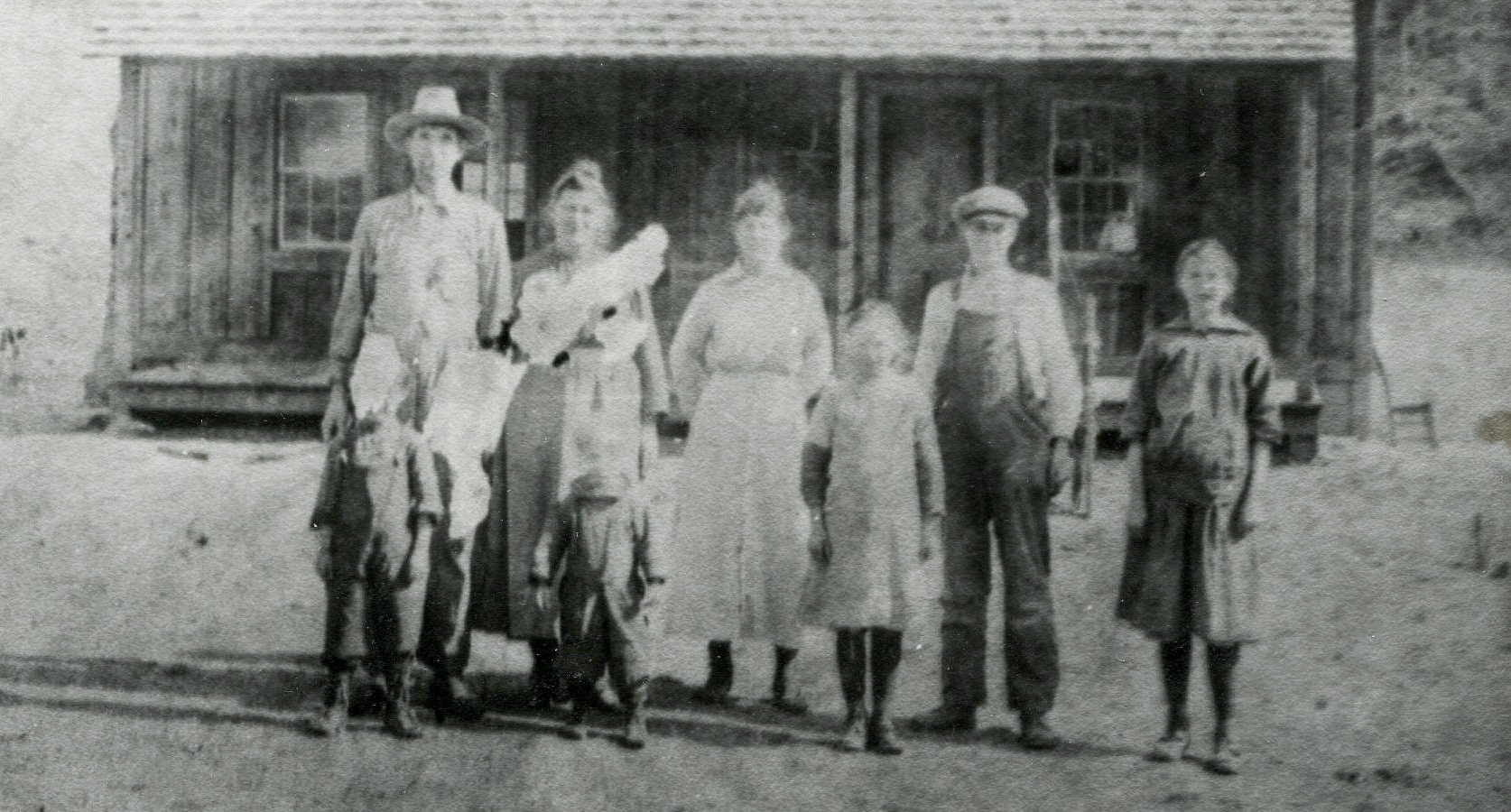
These Saints were not baptized quickly and knew the gospel of Jesus Christ well. The elders would visit the first Saints over long periods of time, in some cases even for many years before they requested to be baptized. Mission presidents taught the elders to not compel friends to baptism, but to wait for them to inquire for and then apply for baptism. Elder Dwaine Madsen reported finding members studying the Book of Mormon in fields during breaks from their work. Missionary journals reveal that ministers and preachers of the day sought debate and proof in scripture. In an environment of religious zeal and theological contention, the Smoky Mountain Saints needed to know their doctrine and defend Christ’s teachings in both the Bible and the Book of Mormon.
Mobs harassed the first Saints in the Southern States Mission and in Tennessee. The Supreme Court ruled against the “Mormons” in the religious freedom case of Reynolds v. United States of 1879, which caused sensationalist press attacks on “Mormonism” throughout the country for decades. False rumors were often reported as facts in the press, even The Maryville Times. One outlandish claim that was repeated often to the missionaries and published in the press was that the missionaries were here in Blount County “to steal women” and take them back to Utah as “captives” as published below in The Maryville Times in November 1893.
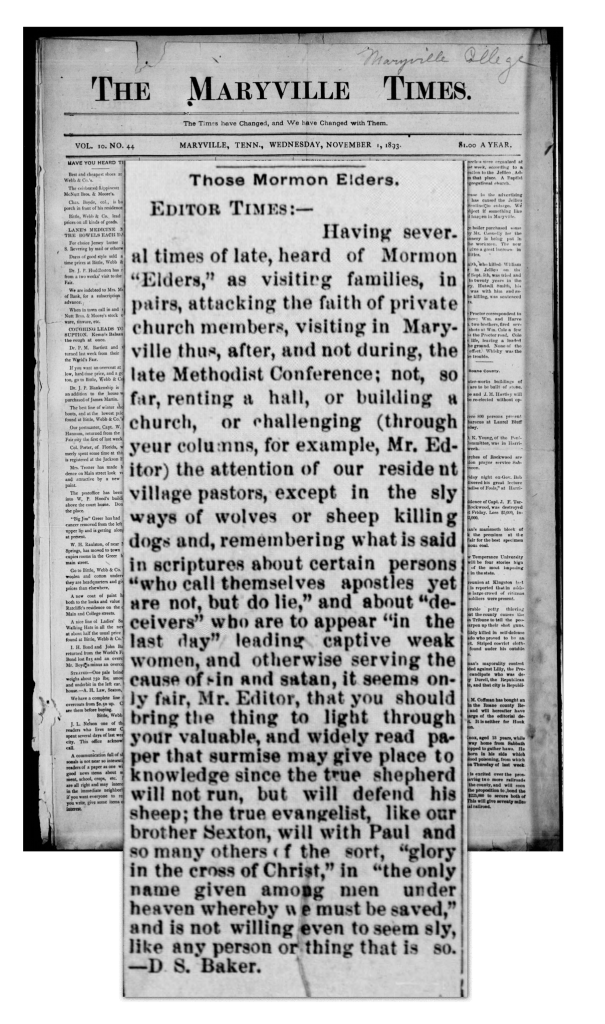
Saints and missionaries in the South were attacked and some were murdered, even in Tennessee. Reports of these mobs, murders, and persecution also were printed often in newspapers throughout Utah, from where most of the missionaries were called. A mission assignment to the Southern States Mission created great anxiety among the newly-called to serve and their families alike.


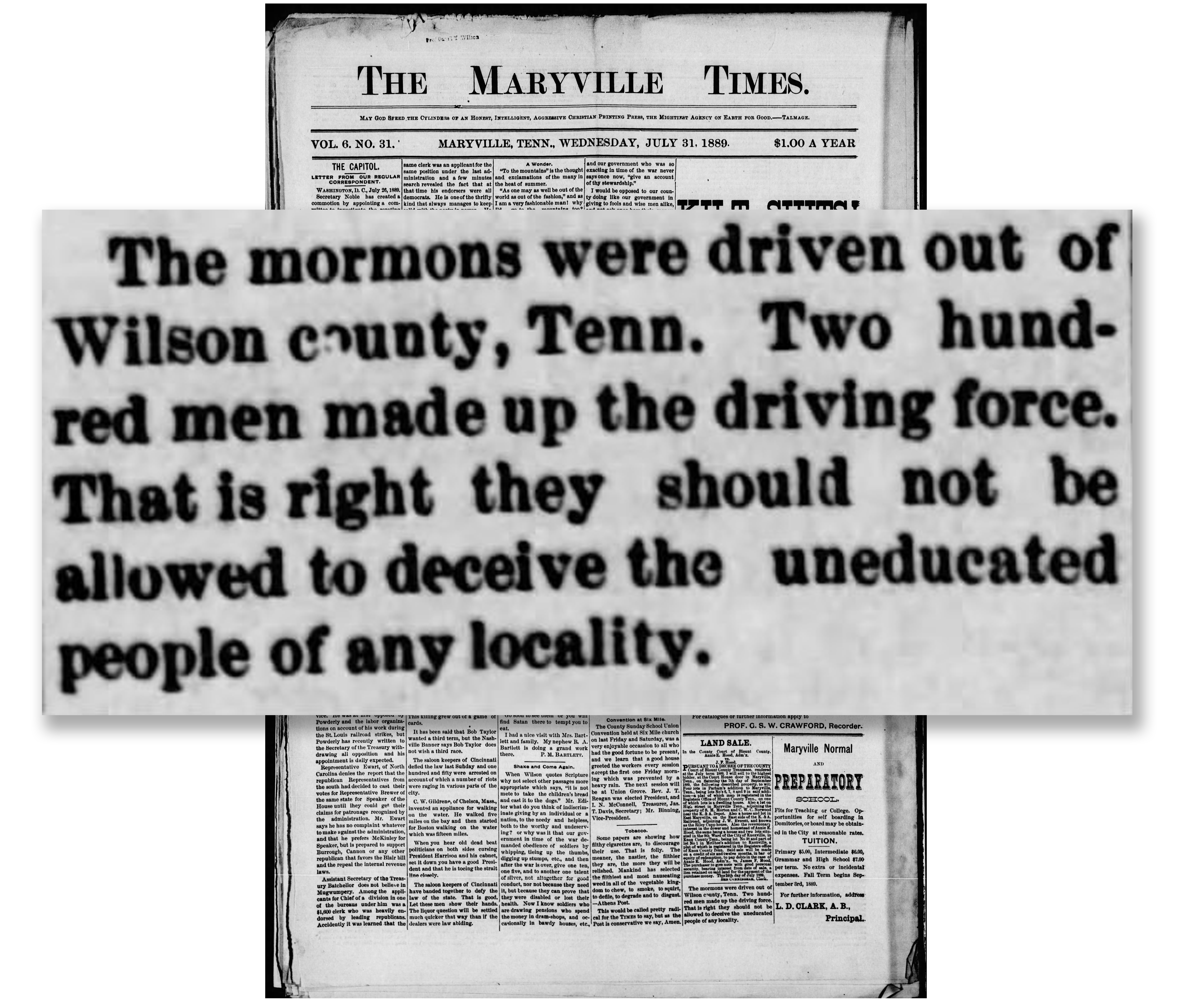
This “anti-Mormon” sentiment abounded for years in the press. When the elders shared the message of the gospel, Blount County residents had already read biased press releases and stories mocking the “Mormons” over polygamy, Mountain Meadows, the “golden Bible,” and much more. The Maryville Times headlined, “The Mormon Delusion,” “The Mormon Infamy,” “The White Caps are after the Mormons,” and more. The Maryville Times would echo the sentiment felt within communities where violence occurred. Dozens of articles in the Maryville Times during this period seemingly justify the violence against missionaries, cheering each time the elders are chased out of a county. This fueled the local religious community to stand against the doctrine of “Mormonism” and consider taking action against the missionaries. Threats against the elders and those who hosted them were not uncommon before and after the turn of the century.
Loving Kindness Prevailed
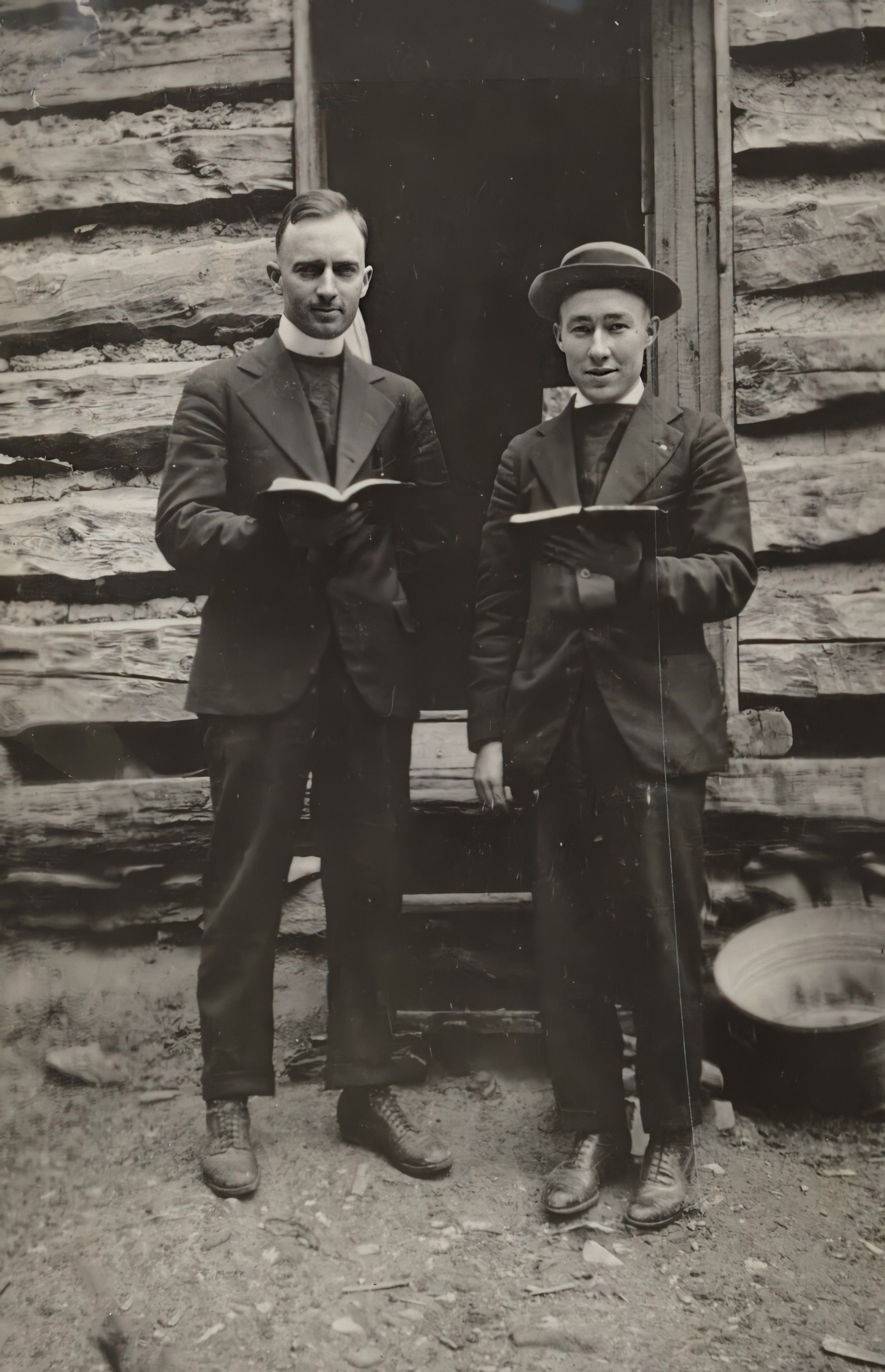
Against this backdrop of trepidation, it is remarkable that so many residents in Blount County opened their doors to the elders. It is also remarkable that so many missionaries entered the mission field with zeal, faith and enthusiasm to walk the trails and dirt roads of the Smoky Mountains. These missionaries and first Saints recognized the dangers and put their faith in God. This is recognized in missionary journals and letters home.
Elder William Fullmer, when talking about the dangers of his trials, quoted Matthew as a reminder to his wife and five children in a letter home: “He that findeth his life shall lose it: and he that loseth his life for my sake shall find it.” Likewise, it is another marvelous work and wonder that so many inquired for baptism in Blount County and taught the gospel of Jesus Christ to their children for generations to come.

The Lord Answered Prayers
One of the first missionaries to participate in a baptism here in Blount County is William Hayes. He attended the Salt Lake Temple dedication and, immediately following, reported to the “mission office” in Salt Lake City to be set apart by George Reynolds, on April 11, 1893. In the Salt Lake Temple dedication prayer, President Wilford Woodruff pleaded for the safety of the missionaries: “Forget not, we beseech Thee, Thy servants the missionaries, who are proclaiming the saving truths that Thou hast revealed for man’s redemption to the millions who are now overshadowed by deep spiritual darkness. Preserve them from all evil, deliver them from mob violence, may they want no good thing, but be greatly blessed with the gifts and powers of their ministry.” Elder Hayes and many missionaries who would follow him would remember this prayer and the change they felt occurred in the people of East Tennessee for decades to follow. Three missionaries had been murdered in the Southern States Mission and this prayer symbolized the beginning of a new era for the missionaries who would labor here, though they would not recognize such until years later.

Enemies of The Church Remained
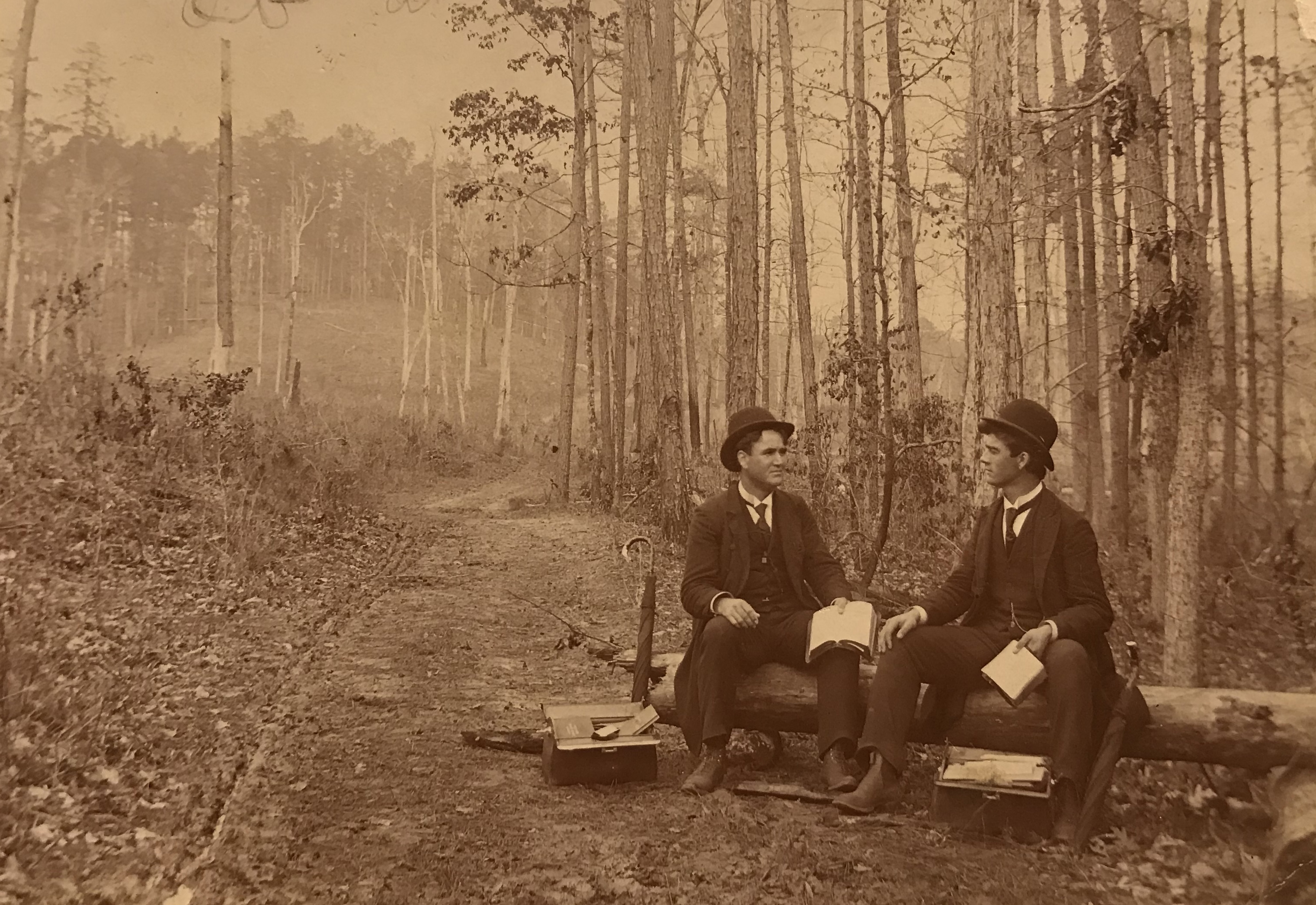
The first missionaries, having been asked to labor without “purse or scrip” and rely on the good nature of their brothers and sisters, were to depart from counties where threats and violence persisted. The elders reported numerous instances of threats and persecution in Blount County, but they found refuge among many who were friendly to the elders. In 1893, Elder Young found the below handwritten note attached to a stick in the road outside of Maryville on the path to Millers Cove with a photo of a man holding a pistol.
“January 14th 1894 – mi dear friends you latter day sance, i am going to give you a peace of good advice. you mormon preachers has to quit passing through this country if you don’t you will take what follows. The people dont low know such people in. The neighbors dont low know listen by *** what is tel you youens han’t nothin but hog thieves and lyers. Dont come in this part kno more for i will be *** *** if they don’t ake you shant we dont want no such doctrin in this country.”
[signed:] old american bulldog

Spiritual Friendships Formed
President of the Southern States Mission, J. Golden Kimball, in an East Tennessee Conference meeting held in 1893, “offered valuable suggestions on the mode of canvassing. Be careful to approach them properly, enter the house, get into conversation with people, talk as long as the party wishes, get into his good graces, then unfold to them your business. Make the work your profession. Disseminating the Gospel is the ‘business our Elders are in.’ Remove all prejudice possible. In case of receiving due warning from the proper source, leave the field but do not heed the threats of every drunken crew, where people only meet to hear you sing etc, do not stay. We cannot spend too much time in any county unless they show a disposition to investigate. The work must be complete. Warn all but do not stay around people merely because they will feed you.“
Sharing the gospel without purse or scrip, required the missionaries to entertain each evening with the family where they sought shelter. They documented singing songs in the evenings before retiring and teaching from the scriptures – the Book of Mormon when it was received well and from the Bible when the former became disagreeable. They often sought permission from Methodist, Quaker, and Baptist church committee members to teach Sunday School in their churches. They received mixed success in being allowed to do so, but often reported the messages were received well from audiences that varied from a couple dozen churchgoers to hundreds.
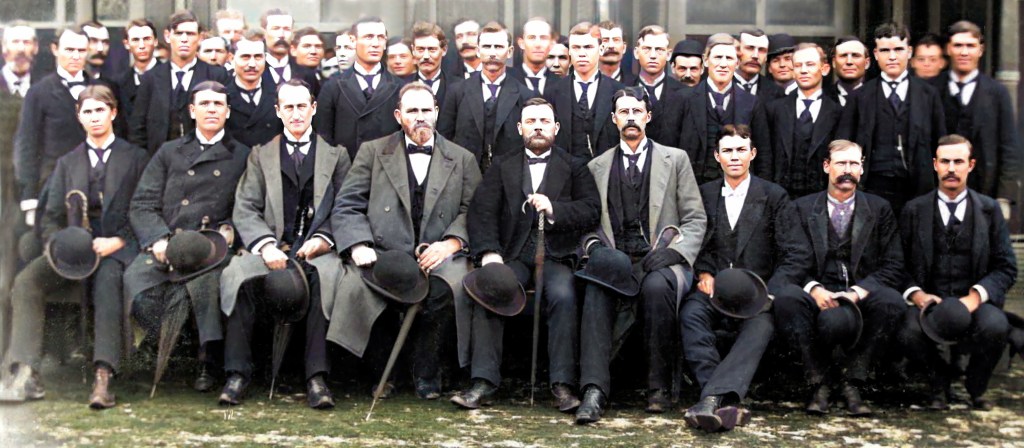
Strong bonds of love and friendship were formed between these Saints and their missionaries. What they experienced together in trials of faith are remembered in their writings, even in their twilight years. These are memories forged through shared times of joy and tribulation. Many decades later and in his last years of life, Elder William Hayes remembered his missionary companion and “life-long friend,” Elder John Halliday, and the Garlands from Millers Cove, when he recounted his last months in Walland.

“In the spring of 1893 I was called to go on a mission to the Southern States. (my diary kept during my mission will give a history of that 30 months spent in Tennessee and North Carolina). After my release on June 10, 1895, I came down with malaria fever and could not start for home until [the] latter part of August and reached home on [the] evening of Aug. 31. I was at the home of some good friends during this sickness, Bro[ther] and Sister Jos[eph John Calvin (JC)] Garland in Blount Co[unty], Tenn[essee]. I shall never forget their kindness. In 1909 I persuaded them to visit Utah and have their temple work done, which they did and were very happy over their visit and its results. During my two-month violent illness, I was watched over by day and night by my life long friend [Elder] John R[oland] Halliday. Without his constant watch [and] care the final outcome of my illness may have been written up in another way entirely. I always feel that l owe him a debt of gratitude which I have been free to express.”
Shared Experiences and Hardships
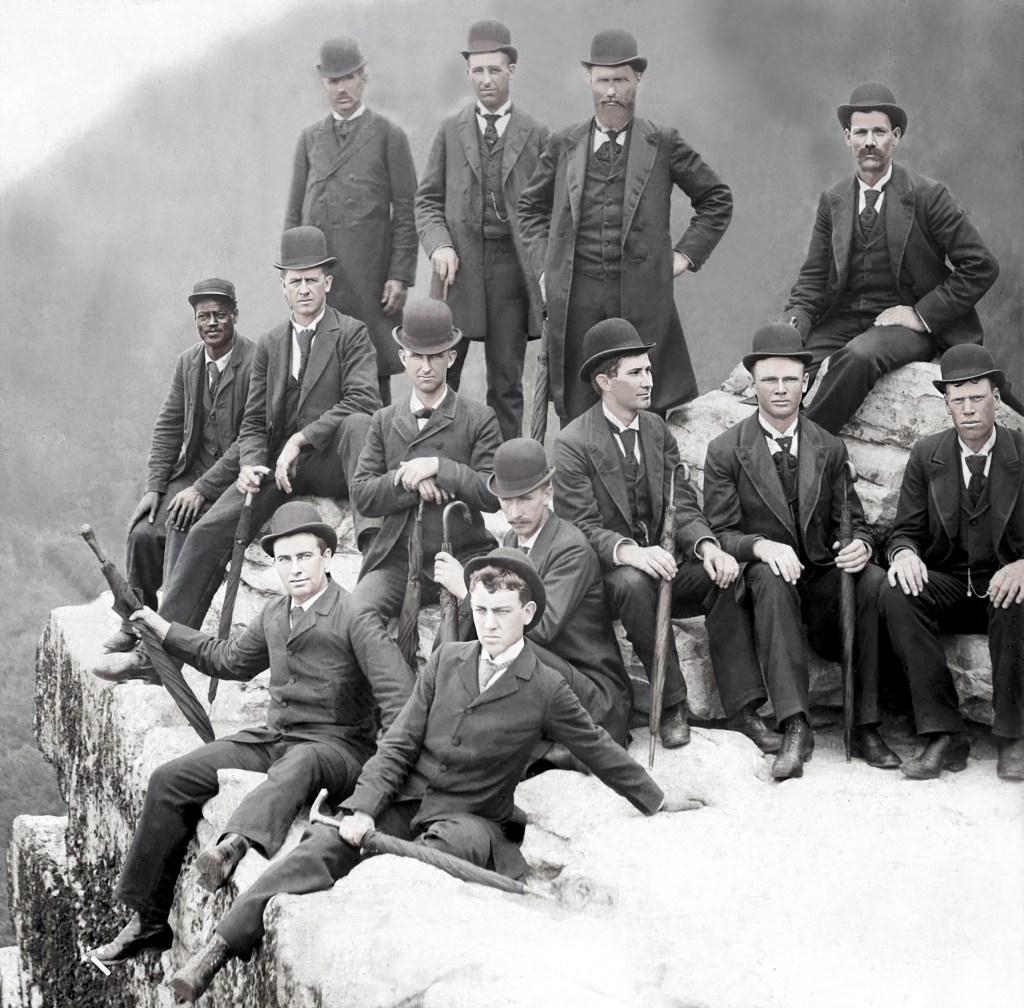
Some of the first missionaries were married, many had children, and some were widowers who left behind young kids to serve in the Smoky Mountains. Many did not request to serve a mission; they were called to serve in an announcement during General Conference. Most were children of early pioneers and one even walked the plains with the first converts heading West. In many ways, they shared similar experiences of trials and challenges with the first Saints in Blount County who emigrated during the reconstruction period following the Civil War. Some were children of those who survived famine and difficulties of the era, and the first experienced difficulties during the War. They sought refuge in the Smoky Mountains and some earned a self-reliant living as “mountain farmers,” providing basic necessities for their large families. Yet, both recognized that God called them during these latter-days. Though from worlds apart – the mountains and deserts of the West and the mountains of Tennessee – the Smoky Mountain Saints and their missionaries proved their faith and consecrated their lives in the service of the Lord.
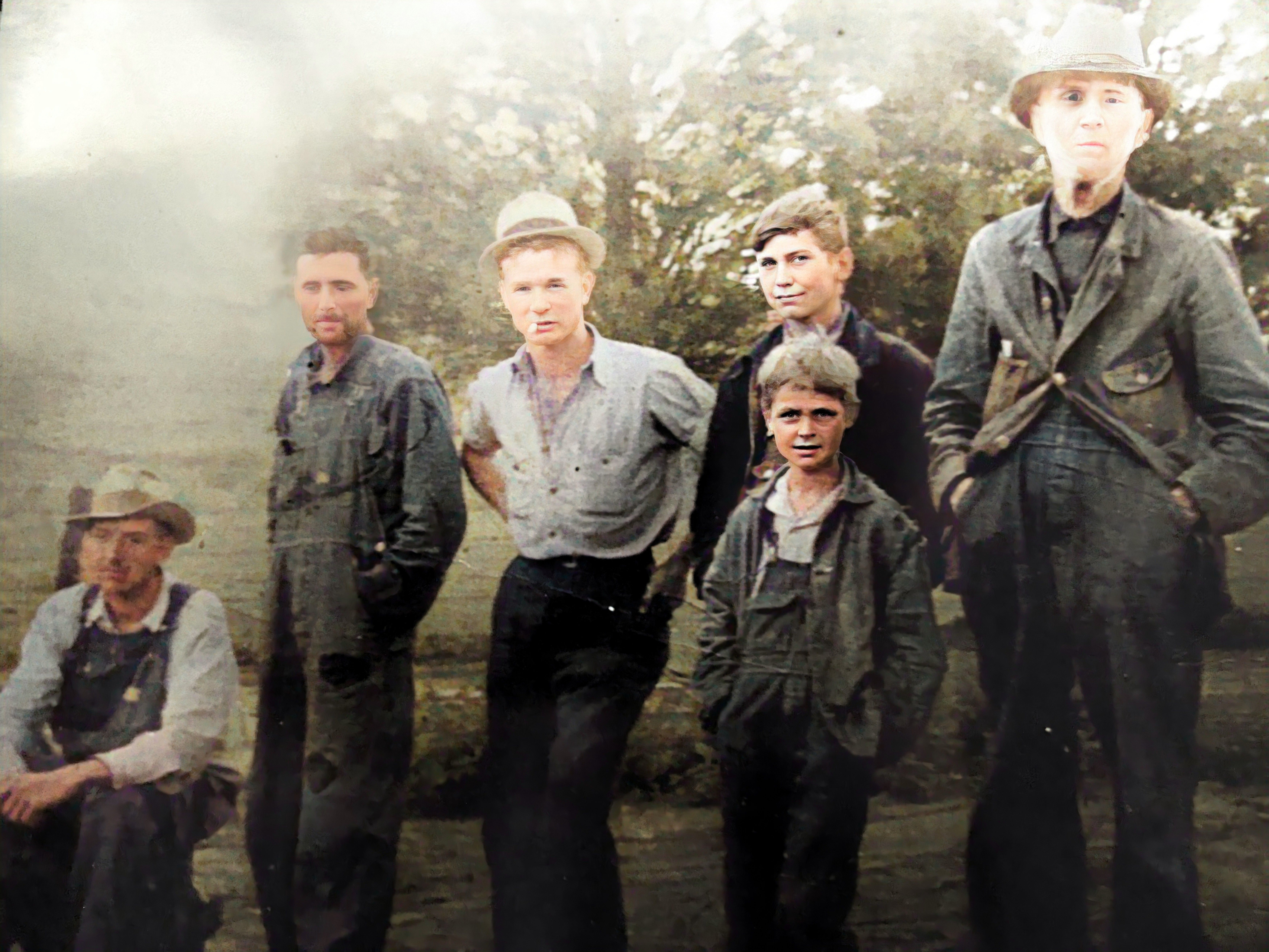
Over a span of 47 years, from 1892 to 1939, there are 81 missionaries who baptized or confirmed the first members of The Church of Jesus Christ of Latter-day Saints within our ward boundaries and two who baptized Harmon children outside of our ward boundaries. These are the missionaries who were identified in baptismal records and journals. To learn more about the first 83 missionaries to baptize and confirm members within our ward, visit the links below.



 Smoky Mountain Ward