
1. JC Garland was baptized November 30, 1893 and worked closely with the missionaries for the next 34 years. Throughout these years, many baptisms can be attributed to JC Garland, based on inferences made in mission journals. However, these are only inferences as the missionaries did not often express personal feelings or assessments of members and their efforts to share the gospel or minister to members. In addition, the missionaries rarely were expressive in describing members, which makes it difficult to understand the Church as an organization in Blount County, generally speaking, and members in particular; however, it seems Elder Hubbard described JC Garland well in his journal. What does Elder Hubbard’s characterization of JC Garland’s heart mean? What can be inferred about JC Garland from this description and his efforts as a member missionary? How do we hope missionaries may write about us?
Find answer in Elder Hubbard’s journal
See July 6, 1895
1917-photo of JC Garland
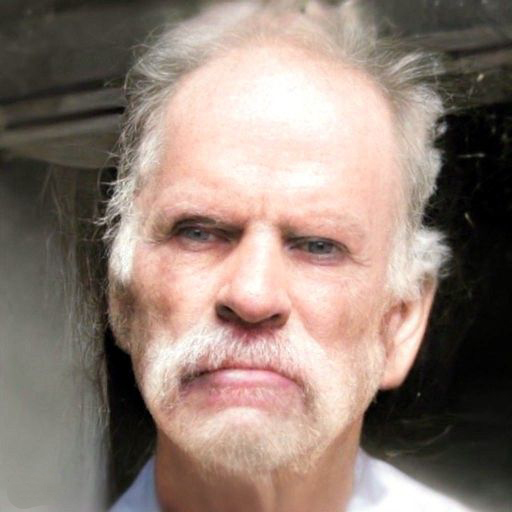
Elder Sutton took this photo of JC Garland at his home in Millers Cove in 1917.
2. Elder William Hayes became friends with Sarah and JC Garland in Millers Cove while working in Blount County in 1894. At his invitation, they traveled somewhere. To where and why did JC and Sarah Garland travel in 1909? Aside from the missionaries, it is likely they were the first from Blount County to do this.
Find answer in FamilySearch
Find answer in dropdown
“In the spring of 1893 I, [William Lehi Hayes], was called to go on a mission to the Southern States. It was no easy task to leave my little baby girl for two years. (My diary kept during my mission will give a history of that 30 months spent in Tennessee and North Carolina). After my release on June 10, 1895, I came down with malaria fever and could not start for home until [the] latter part of August and reached home on [the] evening of Aug[ust] 31. I was at the home of some good friends during this sickness, Bro[ther] and Sister Jos[eph John Calvin (JC)] Garland in Blount Co[unty], Tenn[essee]. I shall never forget their kindness. In 1909 I persuaded them to visit Utah and have their temple work done, which they did and were very happy over their visit and its results. During my two months violent illness I was watched over by day and night by my lifelong friend John R[oland] Halliday. Without his constant watch care the final outcome of my illness may have been written up in another way entirely. I always feel that l owe him a debt of gratitude which I have been free to express.”
-Elder William Lehi Hayes
3. What two pranks did the missionaries play on JC Garland for Christmas in 1894? Does Elder William Hayes appear to enjoy Christmas of 1894?
Find answer in Elder Hayes’ journal
See December 24-25, 1894
Find answer in dropdown
[Monday] – 24 December [1894] Reading and in forenoon. Played harpsichord in the PM. Spent day inside. At night we played “Santa Clause” to the family putting an orange and an apple in each sock or stocking with rocks chips (sic) and sundry other articles for amusement. Bro[ther John Calvin (JC)] Garland undressed and went to bed and left his trousers within reach so we put a gnat[ty] big pumpkin (or punkin) in them and sewed them up, legs and all, and retired for the night.
[Tuesday] – 25 December [1894] A Merry Christmas to all! We are awoken by the children’s jolly cheers. The best fun came when Bro[ther John Calvin (JC)] Garland went to put on his pants. He [illegible] on Elders [Thomas Watts] Sloan, [John Roland] Halliday and [illegible] to my surprise. Santa came to me, bought a nice celuford (sic) soap box. Congenial old Mr. R. he shall never be forgotten. All day was spent in games of various kinds, chiefly Fox and Geese. All night we had a hilarious old time. Played “Brother I’m [illegible] Panorama” and we finished a trap for Bro[ther Joseph John Calvin (JC)] G[arland] by hanging a bucket of bran just over the door so that when he pushed the door open it tipped the bucket up and spilled the bran down his neck. Elder [John Roland] Halliday and I skipped into the dark and Bro[ther John Calvin (JC)] G[arland] threw bran all over Elder [Thomas Watts] Sloan. In all the day was a jolly one, though we often thought and spoke of home and loved ones and wondered how the little ones were spending the day. How beautiful are the serene thoughts of Zion with her hills surrounded. We also had a concert in the evening. Each one having either to sing or speak. We shall never forget the happy hours spent under this old moss-covered roof. Perhaps next year will be spent under our own vine and our own fig tree with those who render life so sweet.
Can’t be the same pants, right?
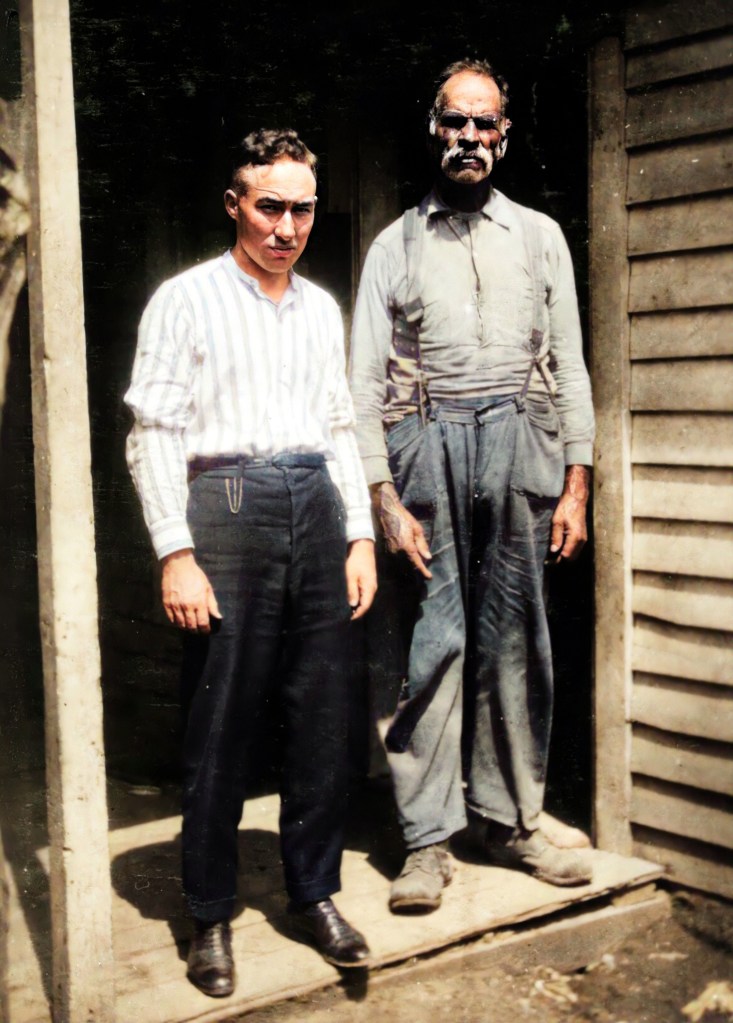
This photo is of Elder Sutton and JC Garland at his home in Millers Cove in 1917.
4. Elder William Ricks, who served in Blount County in 1893, suffered with severe pain in his feet and legs throughout his mission and had to return home because of this. His companion, Elder Robert Young, documented such in his mission journal. There is a reason why his body hurt. Elder Ricks was one of the first pioneer children and was also a Minute Man, helping the pioneers cross Wyoming and protecting the Saints in the Utah territories. So, the question is: How old was Elder Ricks when he traveled with the Heber C. Kimball Company from Nauvoo to Salt Lake, in 1848, and what attributed to his death after his mission? Bonus: Who was his neighbor in Utah?
Find answer in missionary biographies
His neighbor signed his name to the Testimony of Three Witnesses. It could be said that Elder William Ricks is the only secondhand witness to the translation of the Book of Mormon who has been to Blount County, Tennessee. See Dallin H. Oaks’ General Conference talk about William Ricks’ neighbor titled: “The Witness…”
5. What happened to Elder Erickson and Elder Smith while they were laboring in Blount County, in 1909, and what did they do about it?
Find answer in FamilySearch
Find answer in dropdown
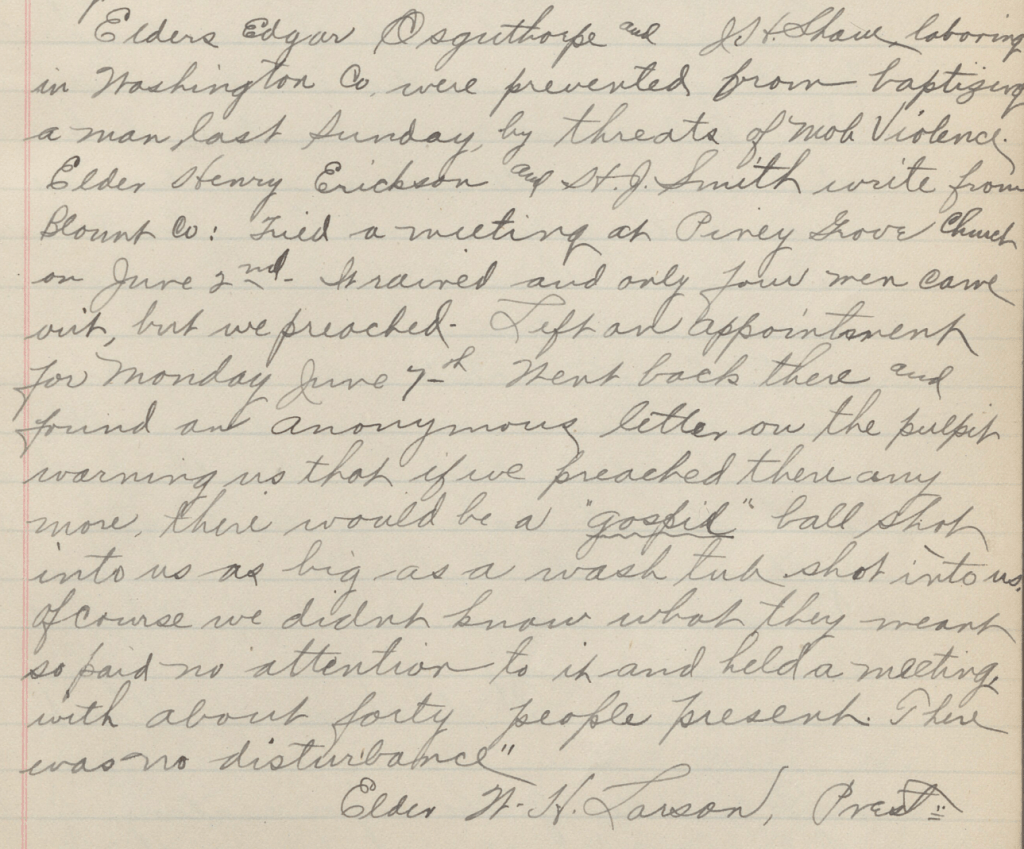
“Elder Edgar Osguthorpe and J[ohn] H[enry] Shaw, laboring in Washington Co[ounty], were prevented from baptizing a man last Sunday by threats of mob violence.
Elder [George] Henry Erickson and H[eber] J[ohn] Smith write from Blount Co[unty]: Held a meeting at Pine Grove Church on June 2nd, it rained and only [a] few men came out, but we preached. Left an appointment for Monday, June 7th. Went back there and found an anonymous letter on the pulpit warning us that if we preached there any more, there would be a “gospel” ball shot into us, as big as a wash tub shot into us. Of course, we didn’t know what they meant, so we paid no attention to it and held a meeting with about forty people present. There was no disturbance.
-Elder W[allace] H[unt] Larson, Pres[ident of the East Tennessee Conference]“
“Godly fear is loving and trusting in Him. As we fear God more completely, we love Him more perfectly. And ‘perfect love casteth out all fear.’ I promise the bright light of godly fear will chase away the dark shadows of mortal fears. As we look to the Savior, build upon Him as our foundation, and press forward on His covenant path with consecrated commitment.” -Elder David A. Bednar
6. The missionaries had many friends who took care of them who were not members of the Church. This was needed while the missionaries labored “without purse or scrip” in the early days. Without these friends, the gospel of Jesus Christ would not have been able to be shared in Blount County. These were people who fed and sheltered the missionaries, particularly during the first 30 years while there was opposition to the Church in East Tennessee. They gave the elders a platform from which to seek out and find the first members while the Church was in its infancy in the county. The Hearons were some of these friends. What did Elder William Hayes say about them in his journal in 1895 and why did he feel that way?
Find answer in Elder Hayes’ journal
See January 25-26, 1895
Find answer in dropdown
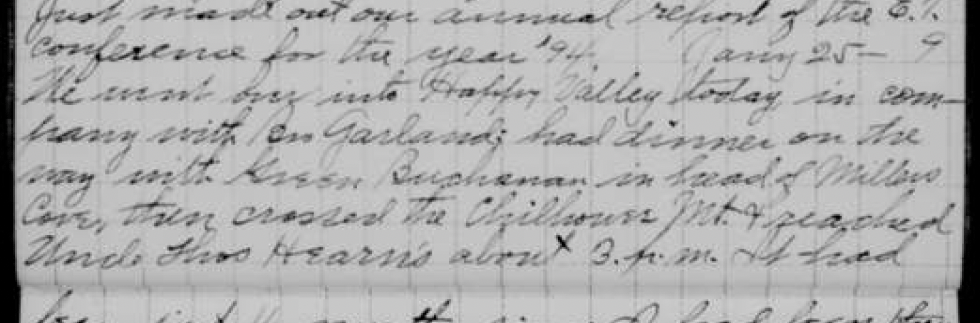
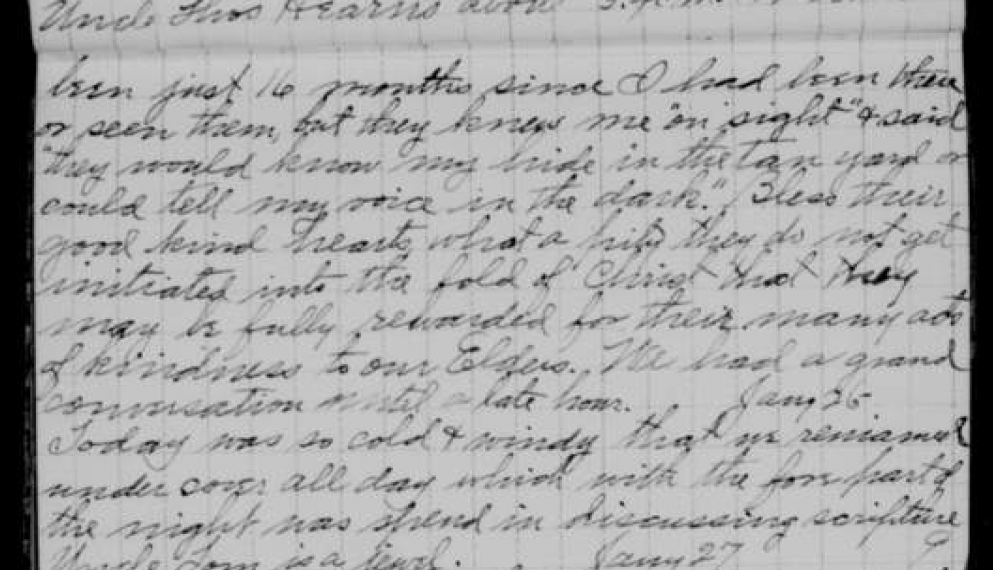
[Friday] – 25 January [1895] We went over into Happy Valley today in company with Bro[ther Joseph John Calvin (JC)] Garland. Had dinner on the way with Green Buchanan in head of Millers Cove, then crossed the Chilhowee Mountain, reached Uncle Thomas Hear[o]n‘s about 3 PM. It had been just 16 months since I had been there or seen them, but they knew me “on sight” and said they would know my hide in the tan yard or could tell my voice in the dark. Bless their good kind hearts, what a pity they do not get initiated into the fold of Christ that they may be fully rewarded for their many acts of kindness to our elders. We had a grand conversation until a late hour.
[Saturday] – 26 January [1895] Today was so cold and windy that we remained under cover all day, which with the forepart of the night was spent in discussing scripture. Uncle Tom [Hearon] is a jewel.
7. Being baptized a second time upon request was a practice that ended over a century ago. Today, we renew our baptismal covenants each time we partake of the sacrament. However, Louvenia Hicks and her father, Jordan Hicks, requested and received a second baptism from the missionaries in 1893. Why did they do this and where were they baptized the second time? Bonus: What are the dates of their first baptisms?
Find why and where in FamilySearch
Find first baptismal dates for:
- Louvenia Hicks’ in FamilySearch
- Jordan Hicks’ FamilySearch
8. One of JC Garland’s sons is Robert Garland, who was baptized, in 1902, and died, in 1925, at age 32. What led to his early death? Robert Garland had two children before he passed away. One of them was Harry Garland, who became a famous vocal coach and taught Bette Midler and Jon Bon Jovi among others. In 2024, the Smoky Mountain Ward youth performed the work for Harry Garland in the Nashville Temple Baptistry.
Find answer in FamilySearch
See first half of page 2 of 2
9. The president of the Southern States Mission, Charles A. Callis, confirmed Paul Garland a member of The Church of Jesus Christ of Latter-day Saints. He also officiated at the wedding of Paul’s parents, JC Garland and Hattie Gentry. Following his 25 years as mission president, he became a member of the Quorum of the Twelve Apostles. Long before this, Charles A. Callis was baptized by missionaries in Dublin, Ireland. The missionary who baptized Charles A. Callis called him something when he was just a kid. What did he call him? What could be said of the impact this missionary made in others’ lives?
Watch or read “Them That Honour Me I Will Honour“
The story of Elder Charles A. Callis begins at the 12:10 time stamp in Elder James E. Faust’s conference talk or in the transcript: “The fourth is to respect yourself as a son of God…”
Memorial to Elder Charles A. Callis.
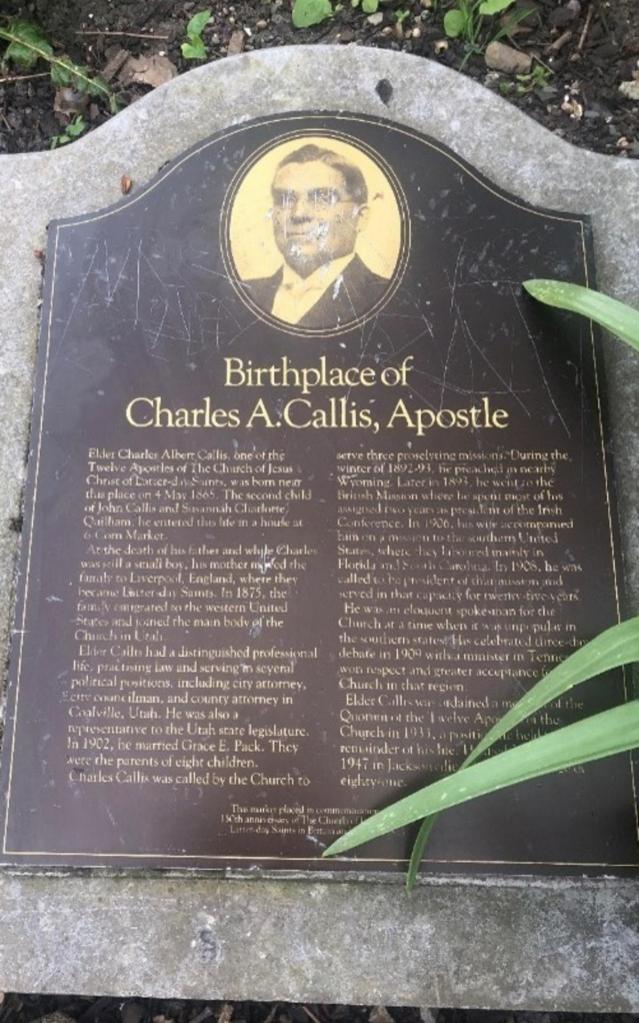
This stone plaque, with the photo and narrative of the life of Charles Callis, sits in St Audoen’s park near the centre of Dublin. Elder Callis is the only person born in the Emerald Isle to become a member of the Quorum of the Twelve Apostles in this dispensation. His service in the Apostleship lasted from 1933 until his death in 1947.
The plaque tells of some of the events of his early life:
The second child of John Callis and Susannah Charlotte Quilliam…at the death of his Father, and while Charles was still a small boy, his mother moved the family to Liverpool, where they became Latter-day Saints. In 1875, the family emigrated… and joined the main body of the Church in Utah.
The plaque goes on to describe Charles Callis’ ‘distinguished professional life, practising law and serving in several political positions, including… city councilman and county attorney in Coalville, Utah.’
However, his formal working life began in the coal mines at age 16 and his later success was due to the determined course of self-education undertaken in his spare time, focusing particularly on the law.
From 1893 he served for two years in the British Mission, spending most of his time as president of the Irish conference. In 1902 he married Grace Pack, and four years later she accompanied him when he was called to serve in the southern United States. He would serve as Mission President there for twenty-five years. The Church was still very unpopular in the southern states at the time, but through his eloquence and knowledge of the law Callis was able to win great respect for the Church in that region.
Charles Callis testified:
From my earliest recollections to the present time I have always had an abiding and intense love for my Savior. I cannot read the story of His sufferings and crucifixion without shedding tears.
The memorial plaque in Dublin was dedicated by Elder Neal A. Maxwell in 1989.
10. Elder John Morley and Elder Heber Palmer were companions in Maryville when they baptized three members. What was this companionship’s age difference? It is worth noting that Elder Morley never mentioned this in his mission journal.
Find answer in missionary biographies
 Smoky Mountain Ward